for holiness in the modern world

We help the church do intercultural ministry better
Vibrancy partners with pastors and leaders navigating intercultural complexity and seeking
a more faithful,
sustainable, and life-giving way forward.
This Is Harder
Than It Looks
Many churches are trying.
They are reaching out to new neighbors in a changing community. They're inviting families from different cultural backgrounds to outreach events and are thrilled when they bring their children and teens to NextGen ministries. They're excited to celebrate together in their first combined worship services, and they're even considering the possibility of sharing facility space.
But along the way, something begins to unravel.
Efforts stall. The combined services have been heartwarming but also long. The neighbors came for Family Fest on Friday but left trash in the parking lot. The Korean pastor says he'll show up but doesn't. Tensions about facilities, youth group drama, and child care just keep coming.
Pastors find themselves caught in the middle, strained by discontent from all sides. The newcomers bring both vitality and needs, but some in the original congregation say they want "their church" back. Leaders wonder how much of the struggle is cultural and how much is personal or spiritual. They're unsure how to move forward and how to bring their people along.
To make matters worse, ministry peers don't seem to understand the complex challenges they're facing or the beauty of what they're trying to cultivate. Some have even characterized their welcome of the stranger as a distraction from the Gospel, rather than a central feature of it.
What started with hope has begun to feel confusing and exhausting. Some quietly wonder whether all the effort is worth it. Wouldn't it be easier to go back to focusing on people they already understand?
What Vibrancy Does
Why "better"?
Many churches are already engaged in intercultural ministry in some form or wondering how to start. "Better" doesn't mean doing more or being compared to others. It means being equipped and encouraged so that all the effort yields less frustration and more fruitfulness.
Why "intercultural"?
Broadly, intercultural reflects the interaction of culturally, generationally, or socioeconomically differing groups.
It includes missions work overseas, multiethnic church ministry right here at home, diverse teams, and everything in-between.
Why "the church"?
Though the Church spans the globe, its primary base for engaging together in the mission of God is the local church. It includes pastors, ministry leaders, missionaries, nonprofit organizations, believing professionals, churches, and teams working in all kinds of cultural contexts, near and far.
Why "help"?
Helping requires humility and a commitment to serve. Every congregation has a unique history and context, so quick fixes and one-size-fits-all models often do more harm than good. We start by listening and go from there. We help clarify what's happening and recommend resources and adjustments for greater effetiveness, sustainability, and joy.
Why "Vibrancy"?
Vibrancy reflects a quality in the life of a church committed to holiness in the modern world. It takes seriously God's provision of power to do his will in a diverse, interconnected society. Vibrant churches are welcoming of the stranger, resonant in Gospel proclamation in partnership with others, and full of energy and life as the Holy Spirit sanctfies.
We help the church do intercultural ministry better.

How This Work Takes Shape
This work is always shaped around your needs and context. These are the most common ways we engage, but we love to collaborate creatively for tailor-made solutions.


Cohort Learning
Small groups of leaders strengthening one another
through guided discussion, topic studies, and practice.
Consulting
Focused support for pastors and leaders navigating specific challenges within their church or organization.


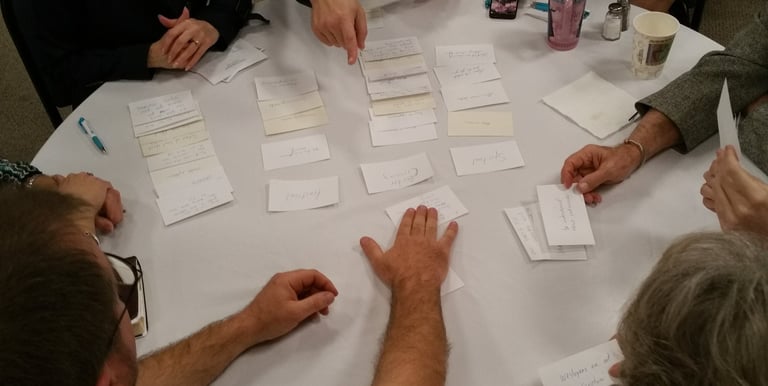
Workshops, Experiences, & Retreats
Interactive learning
designed to help groups engage intercultural realities more deeply.
Inviting churches and organizations to commit to this work as part of their broader calling.
Speaking & Preaching
What Leaders Are Facing
Over time, both in ministry leadership and in my work with churches and organizations, I’ve walked with pastors and leaders navigating situations like these.
A newly-hired pastor has big ideas and hopes for reaching the neighborhood, but the declining congregation regards the locals with fear and suspicion.
An established church welcomes a congregation from another cultural background to share facility space, but things aren't working out as either group had hoped.
A diverse congregation tries to represent everyone stylistically, but it feels as if nobody is ever satisfied.
A missionary serving on the field for fifteen years still feels confused, relationally distant, or hurt in interaction with the locals more often than she'd like to admit.
A non-profit leader cannot get clear answers about why a project overseas has stalled or instructions are not being followed, despite numerous attempts to ask better qestions or hire better people.
A pastor does all he knows to do to approach others with humility and respect but still gets accused of being woke or racist when he mentions (or doesn't mention) a recent public crisis.
Enthusiasm for outreach into a diverse neigborhood wanes when the newcomers show little gratitude or interest in attending Sunday services.
Only one cultural group in a multiethnic church has access to information, makes the diecisions, pays the bills, and does the work. All the paid staff are from that one group, too.
People who don't match the demgraphic majority quietly feel like perpetual visitors rather than members, recipients rather than leaders with something to give.
A district struggles to know how to serve, include, and supervise immigrant congregations.
A white pastor reaches out to an pastor of color to collaborate on community outreach and gets an emphatic no.
The staff of a healthy multiethnic church finds itself ill-equipped to address matters of spiritual warfare and questions about delievrance or healing.
If these challenges sound familiar, you're not alone!
A Personal Note
Vibrancy grows out of years of ministry leadership, teaching, training, and walking alongside pastors and leaders navigating intercultural realities in a wide range of contexts.
Over the years, I've noticed a pattern.
Many very good leaders are deeply committed to communicating and serving well across social and cultural differences, but they get stuck. The reasons are understandable: frustration, fatigue, resistance from their congregations, and cultural challenges they don't fully recognize.
Again and again,
as I've listened and conversed with many of those thoughtful leaders, I have seen them get unstuck and move forward with clarity and renewed confidence. I believe the Lord has been pleased to bless those conversations because he cares so deeply about the leaders and the dfficult work they are trying to accomplish for his purposes.
That's why I started Vibrancy.
Leaning into my experience, my network of collaborators, and
the Holy Spirit's blessing,
I'm delighted to help the church
do intercultural ministry better.
No one ever has
culture all figured out.
But we can learn together
how to lead and love
in a world of difference with
effectiveness, sustainability, and joy.



Connect with Supportive People
Who've Been There
Vibrancy people get it.
Whether you are facing a specific challenge, exploring a new opportunity, or simply trying to make sense of what is happening in your community or organization, you are welcome to reach out.
Better intercultural ministry can start with a simple conversation.